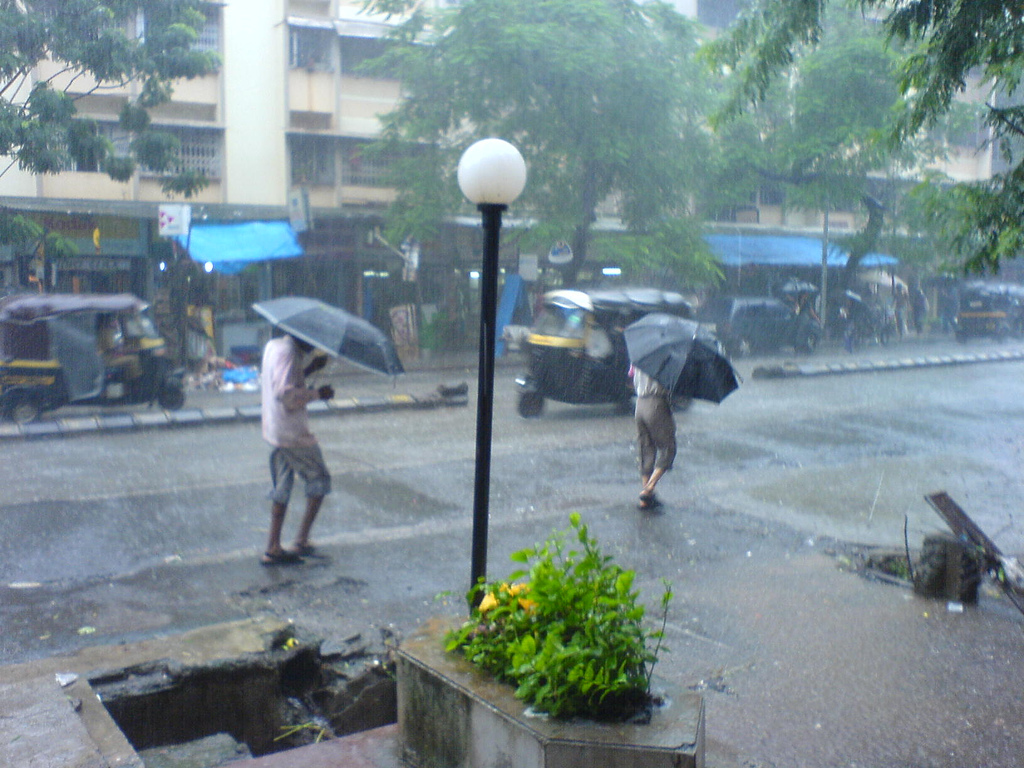
Photo by Rakesh Krishna Kumar, Wikimedia Commons, CC BY-SA 2.0
Gujarat red alert continues in 4 districts as IMD warns of rain on Aug 1
The IMD’s red alert for Ahmedabad, Anand, Surendranagar and Rajkot continues into August 1 as heavy rain persists across Gujarat.
The India Meteorological Department’s red alert for four Gujarat districts — Ahmedabad, Anand, Surendranagar and Rajkot — continued into August 1, 2026, as heavy to extremely heavy rain persisted across the state.
A dozen more districts, including Banaskantha, Vav-Tharad, Patan, Mehsana, Sabarkantha, Gandhinagar, Aravalli, Bharuch, Bhavnagar, Morbi, Botad and Kutch, remain under an orange alert for isolated heavy to extremely heavy rainfall.
The list is smaller than the one issued on July 31, when 13 districts — including Vadodara, Narmada, Chhota Udepur, Surat, Tapi, Dang, Navsari and Valsad — were under red alert, forcing schools and colleges to close in Ahmedabad, Vadodara, Anand and Kheda.
Anganwadis in Ahmedabad are set to stay shut until August 3, according to district officials, even with the city’s red alert continuing into a second day.
Gujarat’s disaster response apparatus remains on high alert, with authorities holding review meetings to track the impact of the ongoing rain spell.
The IMD expects conditions to improve from August 2, when eight districts are forecast to move to a yellow alert as the system loses intensity.
Fishermen along the Gujarat coast have been advised not to venture into the sea during the alert period, as the same weather system bringing heavy rain has also stirred up rough conditions offshore.
The India Meteorological Department has attributed the spell of heavy rain to an active monsoon system moving across the western coast, a pattern it has tracked closely through the final week of July.
Disaster management authorities in the affected districts have been placed on standby, with local administrations coordinating rescue teams and pumping equipment in low-lying areas prone to waterlogging.
Gujarat has seen an active monsoon through late July, with several districts already recording rainfall well above the seasonal average for this point in the year.
The state government has asked district collectors in affected regions to keep emergency helplines active and to coordinate with the State Emergency Operation Centre through the alert period.
Photo by Rakesh Krishna Kumar, Wikimedia Commons, CC BY-SA 2.0